

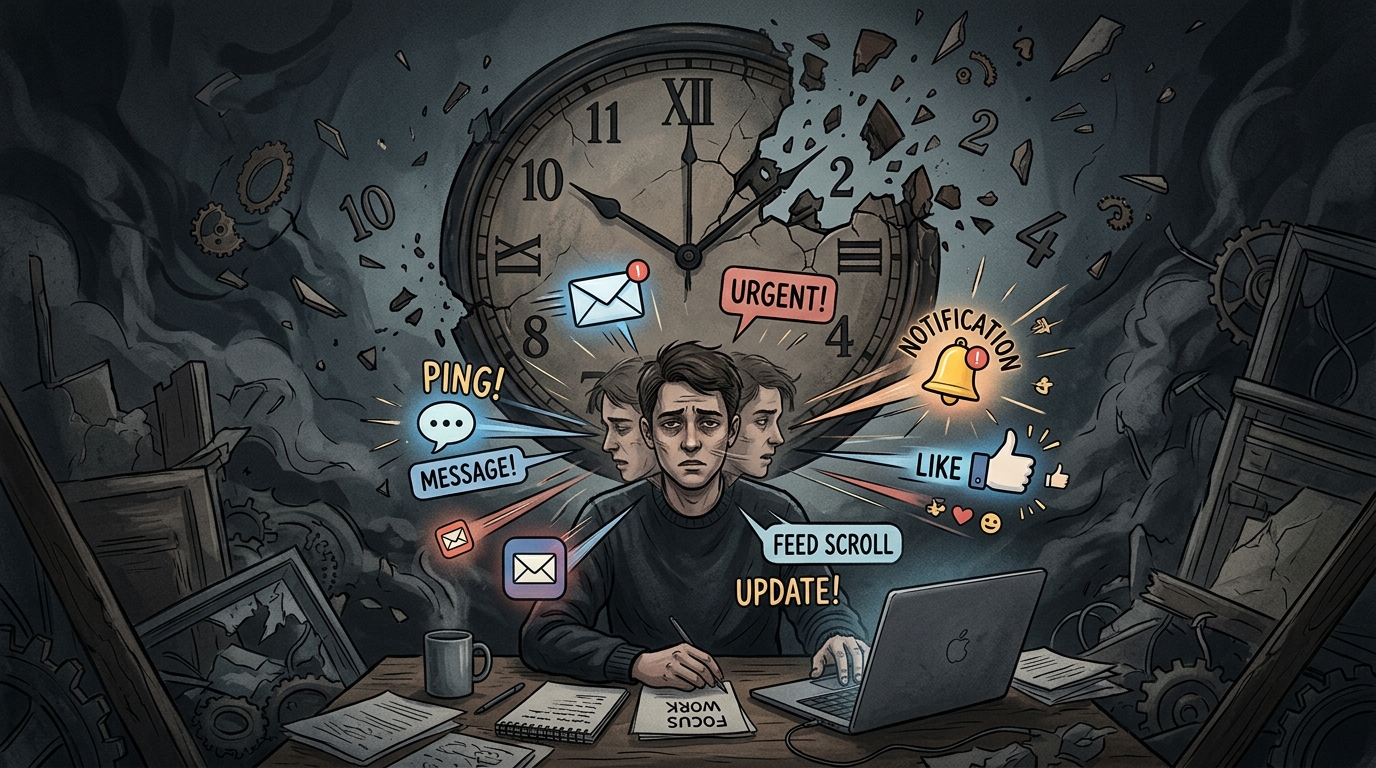
You sit down to do the one task that actually matters today. Two minutes in, a message pings. You glance at it, reply, notice an unread email, open it, remember something you forgot to send, switch tabs, and twenty minutes later you cannot quite remember what you were working on in the first place.
That is context switching, and it is the quiet tax on almost every modern workday. It rarely feels like a problem in the moment — each little jump seems harmless. But added up across a day, constant switching is one of the biggest reasons focused, meaningful work feels so hard to reach. Here is what it really costs, and how to protect the deep work that moves things forward.
What Context Switching Really Costs You
The cost is not just the few seconds spent glancing at the interruption. It is the time and energy needed to climb back into what you were doing — and when you tally those recoveries across a full day, the losses are far larger than they feel in the moment.
The Recovery Tax
Research led by information scientist Gloria Mark, discussed in this Gallup interview, found that after an interruption it can take over twenty minutes to return to the same depth of focus. She summed up the effect memorably: we no longer have work days, we have work minutes that last all day. A handful of interruptions can quietly swallow hours of your best thinking time.
Attention Residue
Even when you do return, part of your mind stays stuck on the previous task. Psychologists call this attention residue — the lingering pull of the thing you just left, which drags on the quality of the thing you are trying to do now. It is why your work feels foggy after a busy morning of jumping around, even if you were technically “productive” the whole time.
Why Switching Feels Productive but Isn’t
Here is the trap: context switching feels like getting things done. Clearing a notification, firing off a quick reply, checking one more thing — each gives a small hit of accomplishment. Motion is mistaken for progress.
The reality is less flattering. Research summarized by the American Psychological Association shows that shifting between tasks reduces efficiency and increases mistakes — by some estimates costing up to 40 percent of your productive time — because the brain is not built to hold two demanding jobs at once. What feels like doing more is usually doing everything a little worse. Busy and effective are not the same thing, and constant switching keeps you firmly in the first camp.
The Hidden Sources of Context Switching
We tend to blame other people for breaking our focus, but a surprising share of the damage is self-inflicted.
Self-Interruptions
Much of the switching in a normal day comes from us — an urge to check a phone, refresh an inbox, or “quickly” look something up. These reflexes feel small, but they fracture attention just as effectively as any outside interruption.
Notifications and Too Many Tools
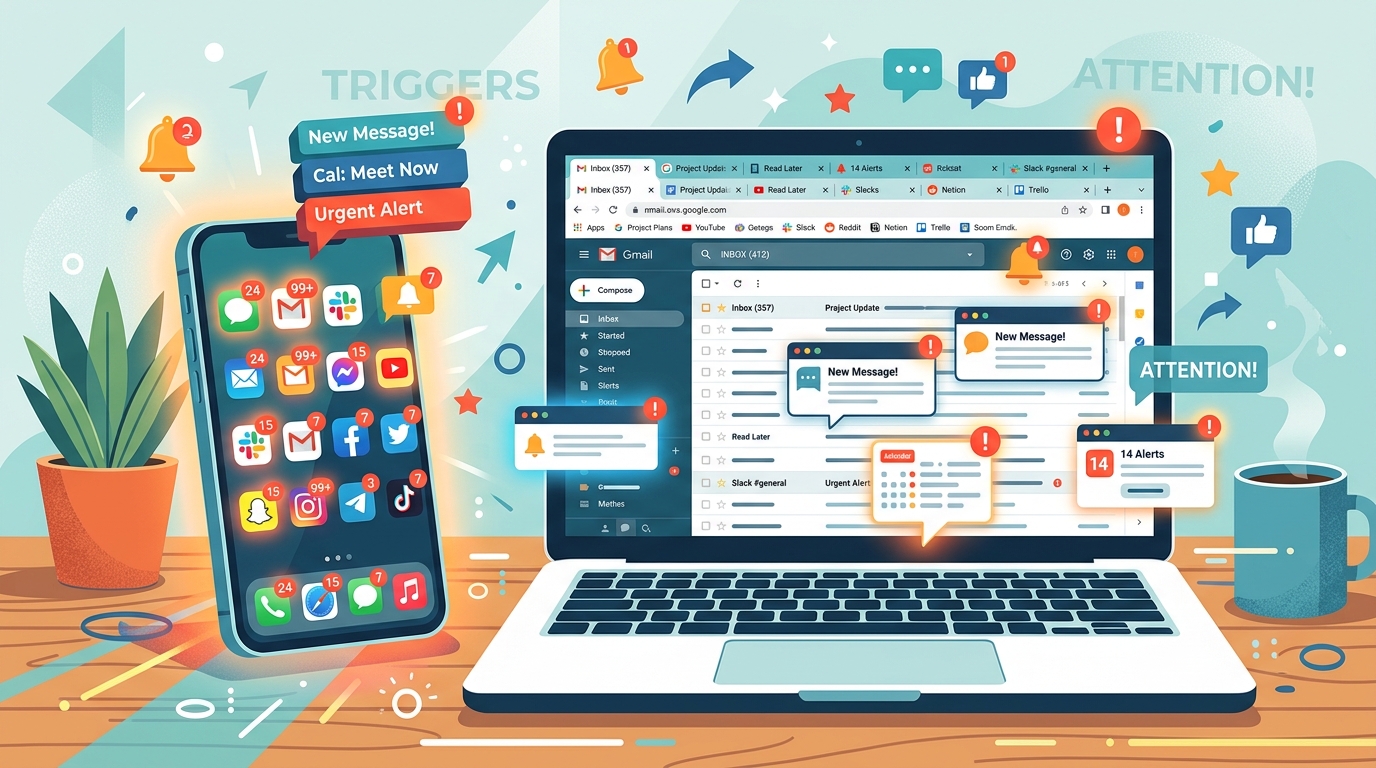
Every badge, banner, and buzz is an invitation to switch. Spreading your work across a dozen apps multiplies those invitations, so a cluttered digital setup quietly guarantees a fragmented day. The more places your attention can be pulled, the less of it lands on real work.
Meetings and Open Loops
Back-to-back meetings leave no runway to reach depth, and every unfinished task you carry in your head is its own quiet interruption. An unresolved question or a “I’ll deal with that later” nagging at you keeps pulling attention away from whatever is in front of you.
How to Protect Deep Work
You cannot remove every interruption, but you can build a day that defends your best hours instead of surrendering them.
Batch Similar Tasks
Group shallow work — email, messages, small admin — into a few set windows rather than letting it leak through the whole day. Handling like with like keeps you from paying the recovery tax over and over.
Protect Focus Blocks
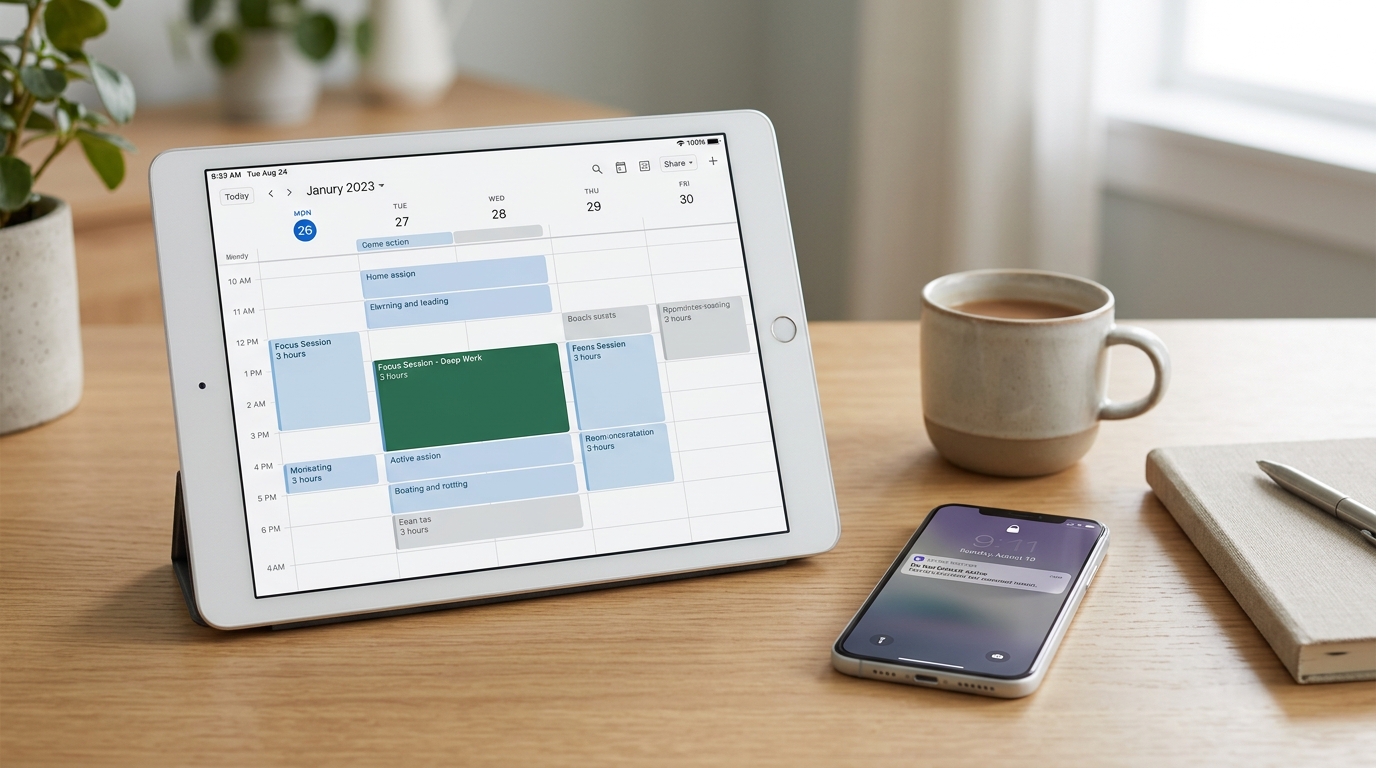
Reserve one or two uninterrupted blocks for your most important task, and treat them as real appointments. This is where thoughtful AI and digital tools can help by automatically defending time on your calendar. Pair the blocks with clear priorities so you always know what deserves that protected time; a little goal-setting up front makes the choice obvious.
Reduce Your Inputs
Silence non-essential notifications, close tabs you are not using, and trim the number of apps competing for your attention. Fewer inputs mean fewer reasons to switch in the first place.
Single-Task on Purpose
When you start a focus block, commit to one task and nothing else. Keep a notepad nearby to capture stray thoughts so they stop tugging at you, then return to the single job in front of you. Deciding in advance what you are not going to do is half the battle.
Making Focus a Habit, Not a Heroic Effort
None of this works if it depends on willpower alone. The goal is a repeatable rhythm — a normal shape to your day where deep work has a protected place and shallow work has its own. Start small: defend a single focus block tomorrow, guard it like a meeting you cannot move, and notice how much more you finish. Over time, protecting attention becomes part of building better habits rather than a daily battle of self-control. Progress does not require a perfect day with zero interruptions; it only requires a few honest hours where switching is kept firmly out.
The Bottom Line
Context switching is expensive precisely because it hides in plain sight. Each jump feels trivial, yet together they quietly drain the focus your most important work depends on. Protecting deep work is not about doing more — it is about doing fewer things with your full attention, and giving the things that matter the uninterrupted time they need.