

Ask someone how their week went and you will often hear the hours: “I was slammed, I worked twelve-hour days, I barely stopped.” What you rarely hear is what actually changed because of all that effort. We have been trained to treat time spent as proof of progress, even though the two are not the same thing.
That is the problem outcome-based goals are built to solve. Instead of planning around how many hours you will put in, you plan around the specific result you want to create — and then let that result guide how you spend your time. It is a small shift in framing that changes how a whole week feels. It also takes the pressure off simply grinding and puts it on doing the right things.
What Outcome-Based Goals Actually Are
An outcome-based goal is defined by the change you want to see, not the activity required to chase it. “Spend ten hours on marketing” is an activity. “Bring in twenty new email subscribers this month” is an outcome. One measures motion; the other measures a real result you would actually care about.
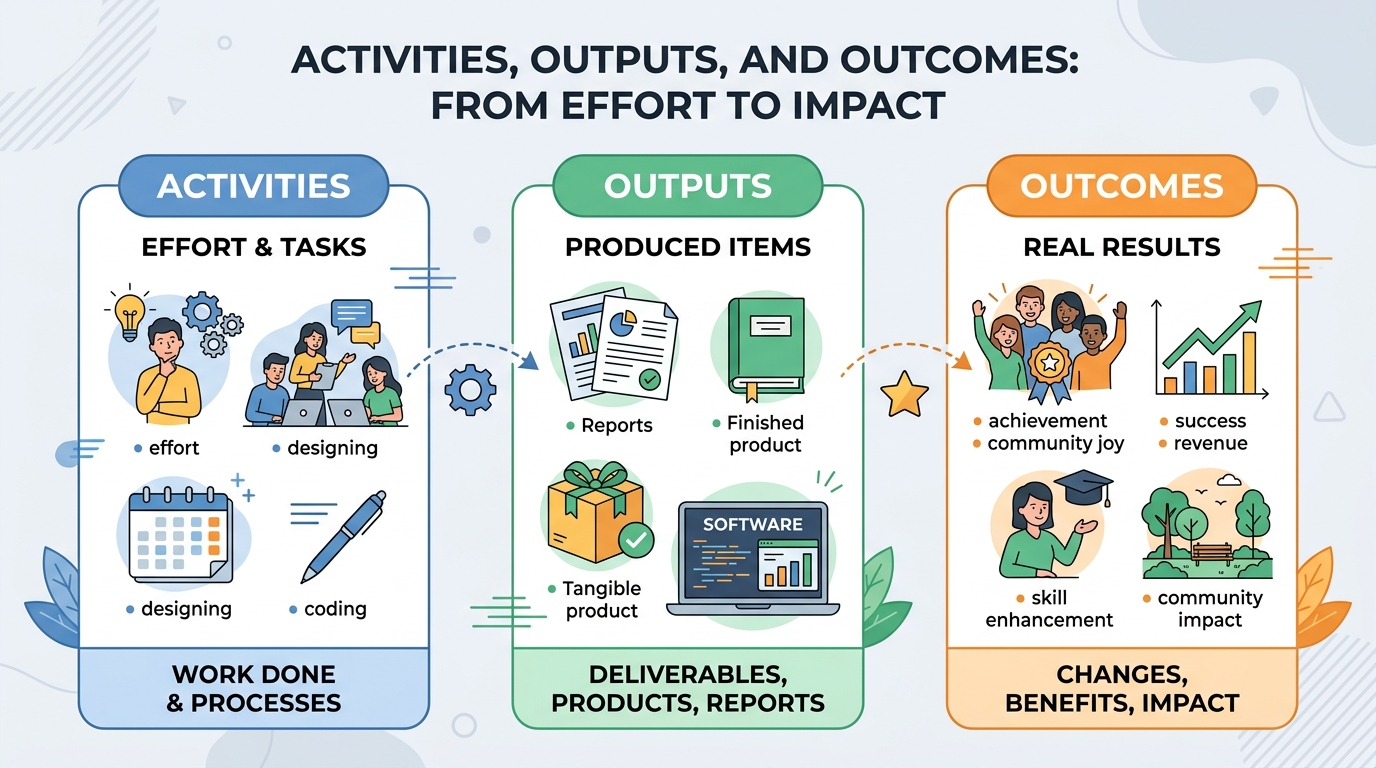
Outcomes vs. Activity
It helps to separate three things: activities are what you do, outputs are what you produce, and outcomes are the difference those produce. As a classic Harvard Business Review piece puts it, outputs are the stuff you make while outcomes are the benefit that stuff creates. Writing five blog posts is an output; readers who come back because those posts helped them is the outcome.
Why the Difference Matters
When you aim at an outcome, you stay honest about whether the work is actually working. You can write for hours and produce nothing anyone reads. Outcome-based goals keep your attention on the result, so effort that is not moving the needle gets noticed and redirected instead of rewarded simply for existing.
Why Measuring Hours Fails You
Hours are easy to count, which is exactly why they are so tempting — and so misleading. Time logged tells you how busy you were, not how much you achieved. Two people can spend the same eight hours and end the day worlds apart in what they actually moved forward.
Think of two writers with the same deadline. One measures success by staying at the keyboard all day; the other measures it by finishing a clear, publishable draft. The first can log more hours and still have less to show for them. The habit of counting time quietly rewards the wrong one.
Measuring by hours also encourages the wrong behavior. Work tends to expand to fill the time you give it, so a goal of “work all afternoon on this” often produces a slow, padded afternoon. Worse, rewarding hours over results pushes people toward looking busy and toward the kind of overwork that leads straight to burnout — long days that feel productive but deliver very little of value.
How to Set an Outcome-Based Goal
Turning a vague intention into a real outcome-based goal takes only a few steps.
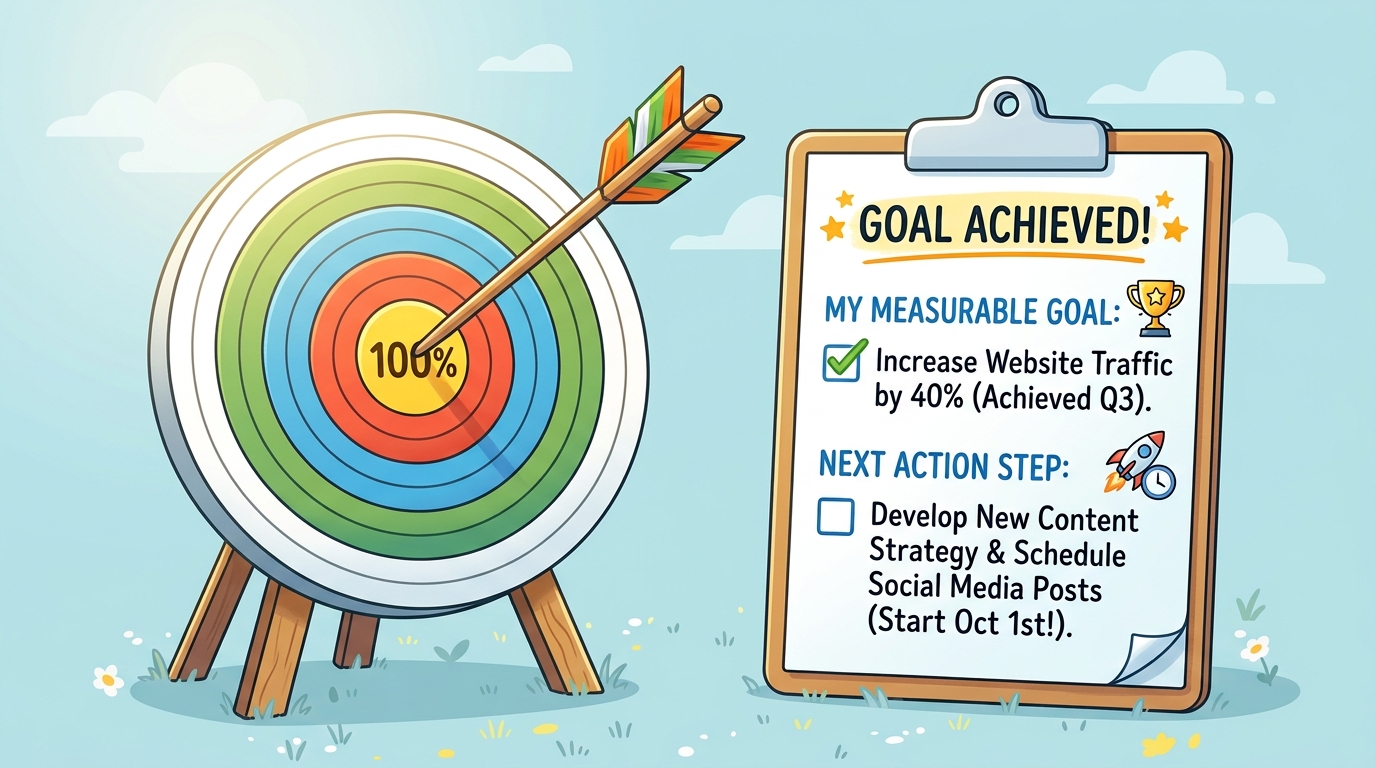
Name the Result You Want
Start with the change, not the task. Ask, “What would be different if this went well?” The answer — more customers, a finished draft, a healthier routine — is your outcome. Everything else is just the path to it.
Make It Specific and Measurable
Decades of research on goal setting by psychologists Edwin Locke and Gary Latham, summarized well by Mind Tools, show that specific and challenging goals consistently beat vague, “do your best” intentions. “Get fitter” is fuzzy; “run five kilometres without stopping by the end of March” is a target your brain can organize around.
Define the Next Visible Action
An outcome you cannot start on today is just a wish. Break it down until you can name the very next concrete step, then the one after that. This keeps a big result from feeling paralyzing and gives you something to do this week.
Build in Feedback
Set a simple way to check whether you are getting closer. Without feedback you cannot tell effort from progress, so decide up front how you will measure it — a number, a milestone, or a weekly review.
Turning Outcomes Into Weekly Progress
A goal set in January does nothing on its own. The work happens when you translate a longer-term outcome into what you will actually do this week.

Each week, pick the one outcome that matters most and decide on the single most useful action toward it. Protect real time for that action rather than hoping it fits into the gaps — this is where protecting your focus turns a good intention into finished work. Then, at the end of the week, review honestly: did the result move, or just the hours? Keep the review short and specific — three minutes with one honest question beats an elaborate system you will abandon. Outcomes are reached through repeated action, so treating this rhythm as part of building better habits matters more than any single heroic push.
Common Pitfalls to Avoid
A few traps can quietly turn outcome-based goals back into busywork.
Watch out for vanity metrics — numbers that look impressive but do not reflect real value, like follower counts that never turn into anything. When in doubt, ask whether a metric would still matter if no one else ever saw it. Avoid chasing too many outcomes at once, which scatters your attention and stalls all of them. And be careful not to set goals entirely outside your control; aim at what you can influence through your actions, and let the results follow. The right digital tools can help you track the outcomes that matter, as long as they measure results rather than just activity.
The Bottom Line
Hours will always be the easiest thing to measure, but they are rarely the thing worth measuring. Outcome-based goals keep your planning pointed at what actually changes — the result, the impact, the progress you would genuinely be proud of. Decide what you want to be true, work backward to this week’s next step, and let go of the idea that a long day is the same as a good one. Progress is measured in results, not in time served.