

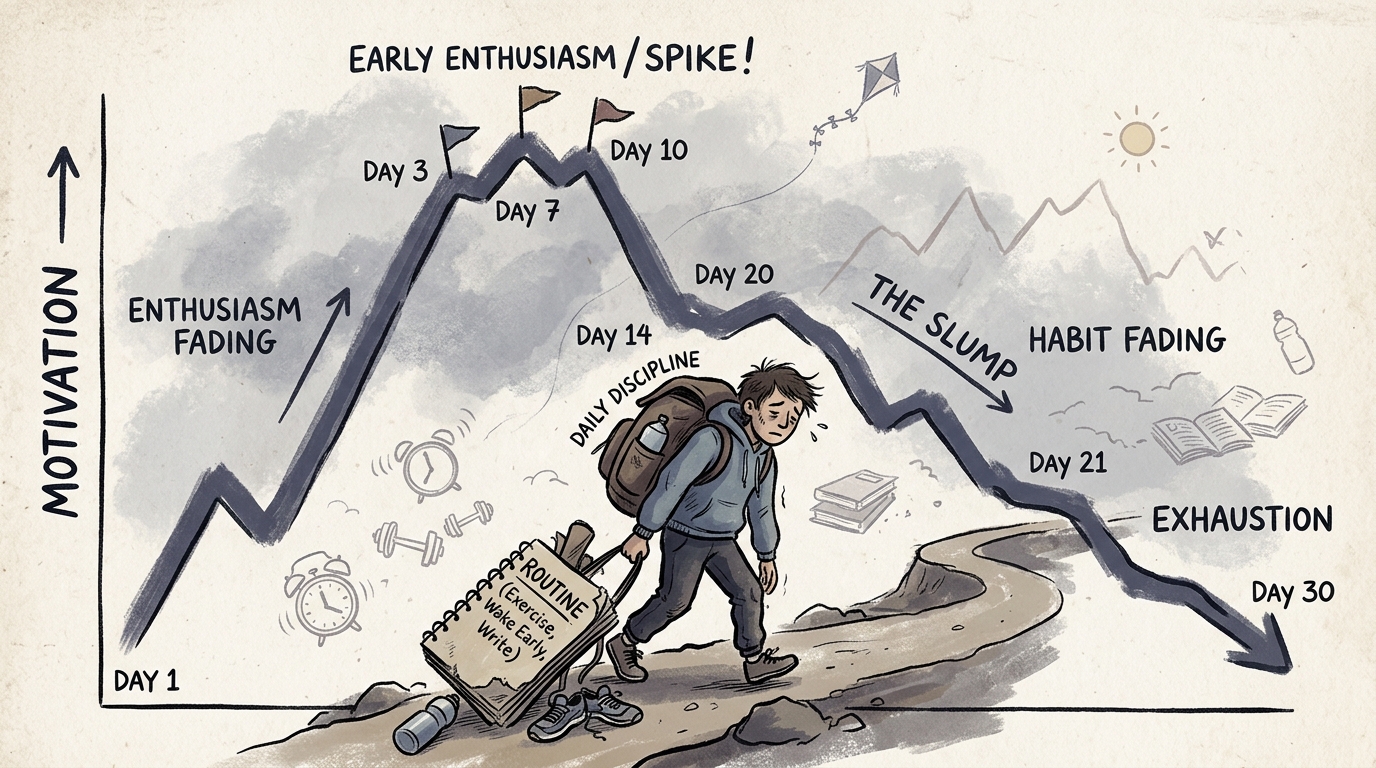
It is a familiar story. You decide this is the week you will finally build a better routine — plan every morning, review every evening, stop checking your phone first thing. For a few days it works. Then a busy afternoon throws you off, one skipped day becomes three, and by the end of the month the new routine is quietly gone.
When this happens, most of us blame ourselves and reach for more willpower. But the truth is that productivity habits usually fail for predictable, fixable reasons that have very little to do with discipline. The good news is that the fixes are just as predictable. Understand why habits break down, and you can build them so they actually last.
Why Productivity Habits Fail
New habits rarely collapse because you are lazy. They collapse because of how they were set up in the first place.
You Lean on Motivation
Motivation is a terrible foundation because it comes and goes. On the day you feel inspired, the habit is easy. On the day you are tired, stressed, or busy, there is nothing holding it in place. A habit built only on feeling like it will not survive the first hard week.
You Start Too Big
Big, ambitious changes feel exciting, but they demand a lot of energy every single day. “Wake up at 5am, journal for an hour, and plan my whole week” is impressive on paper and exhausting in practice. The bigger the ask, the more likely you skip it the moment life gets in the way.
You Skip the Cue
A habit needs a trigger — a specific moment that reliably reminds you to act. “Be more organized” has no cue, so it never actually starts. Without something in your day that says “now,” even a well-intentioned habit simply never gets going.
You Expect Results Too Fast
Many people have heard that habits take twenty-one days, then feel like failures when a new routine still takes effort after three weeks. That number is a myth, and believing it makes people quit right in the middle of the learning phase — the exact point where sticking with it matters most. Real habits take longer to settle, and that is completely normal.
How Habits Actually Form
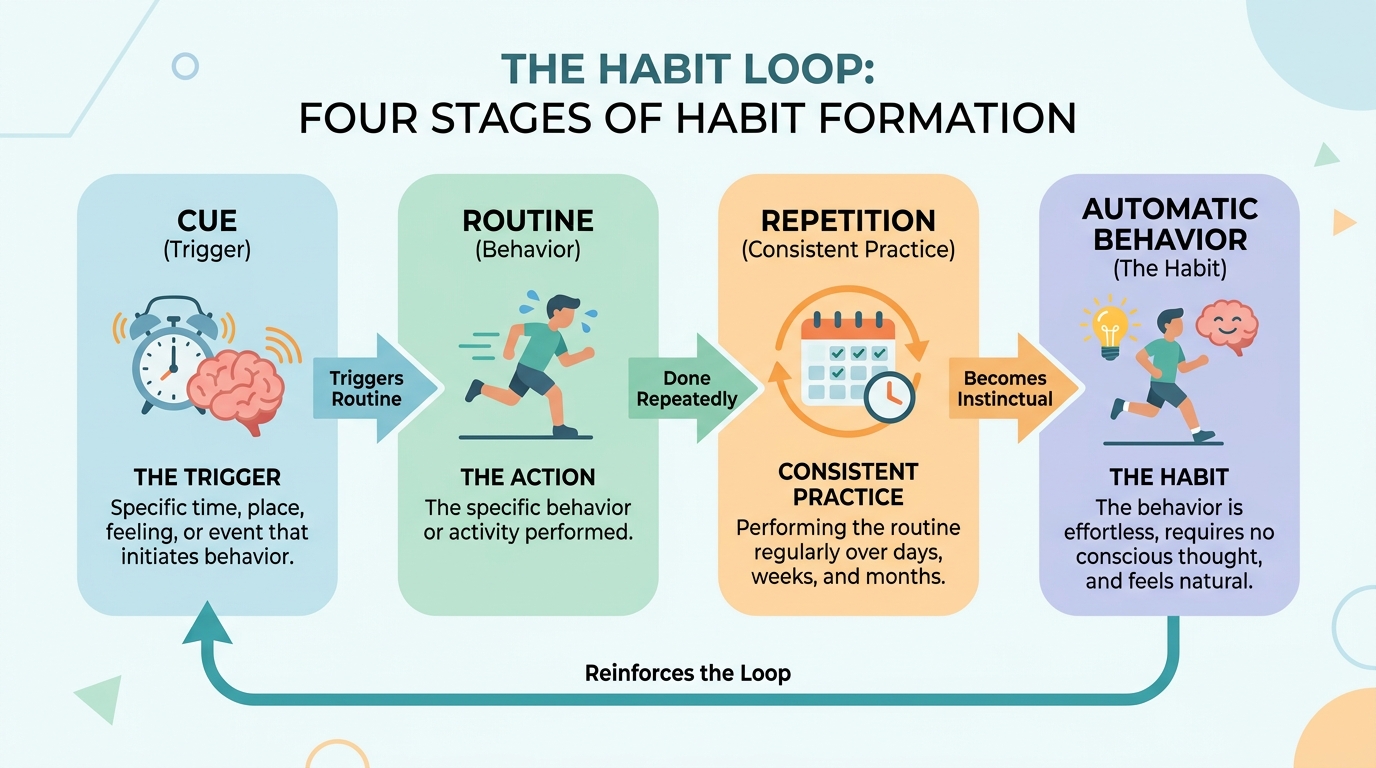
A habit is really just a behavior that has become automatic — something you do without deciding to, triggered by a cue in your environment. Getting there takes consistent repetition in a stable context, and once it happens the action stops draining your attention and starts running quietly in the background.
Research on habit formation published in the British Journal of General Practice found that a behavior becomes automatic on average after about 66 days of repetition, not 21 — and that the number varies widely from person to person. The same research highlights something reassuring: missing a single day does not undo your progress. It also shows why cues matter so much. When you attach a new action to a consistent point in your day, like “after I pour my morning coffee,” the routine slowly transfers from something you have to remember into something the moment itself triggers. Habits are also how the goals you set actually get done, one repeated action at a time.
How to Make Productivity Habits Stick
Once you know how habits form, building durable ones becomes far more straightforward.
Start Ridiculously Small
Shrink the habit until it feels almost too easy — two minutes of planning, one line in a journal, a single review question. A small habit you actually do beats a big one you abandon. You can always grow it later, once showing up is automatic and no longer takes convincing.
Anchor It to an Existing Routine
Attach the new habit to something you already do without fail. “After I sit down at my desk, I write my top three tasks.” The existing routine becomes the reliable cue, so you are not depending on memory or motivation to get started — the trigger is already built into your day.
Make It Obvious and Easy
Reduce the friction between you and the habit. Leave the notebook open on your desk, put the app on your home screen, prepare what you need the night before. Simple digital tools like habit trackers can help too, as long as they make acting easier rather than adding another thing to manage.
Tie It to Your Identity
The most durable habits are backed by a sense of who you are. As James Clear explains in his writing on identity-based habits, each small action is a vote for the type of person you want to become. Do not just “try to plan more” — become someone who plans. That shift in self-image is what carries a habit through the days you do not feel like it.

Give It Time and Room to Recover
Even a well-designed habit needs patience. The early weeks will feel effortful, and that is normal, not a sign of failure. Protect a little time and space for the habit to take root rather than expecting it to slot perfectly into an overloaded day; this is one place where protecting your focus pays off. And when you inevitably miss a day — everyone does — treat it as a single data point, not a collapse. What breaks a habit is not one missed day; it is deciding that the missed day means you have failed. Get back to it the next day, and the streak that matters, the long one, stays alive.
The Bottom Line
Productivity habits do not fail because something is wrong with you. They fail when they lean on motivation, start too big, lack a clear cue, or get abandoned before they have had time to form. Flip each of those around — small, anchored, easy, identity-backed, and given time — and the same habits that used to fizzle out start running on their own. That is the real goal: routines that keep working long after the initial burst of enthusiasm is gone.